The Asian-African Legal Consultative Organization (AALCO), jointly with the International Committee of the Red Cross (ICRC), successfully organised a Panel Discussion on “International Humanitarian Law and the Growing Involvement of Civilians in Cyber Operations During Armed Conflict” on Thursday, 21 May 2026, at the AALCO Secretariat in New Delhi. The event brought together diplomats, legal experts, scholars, representatives of international organisations and practitioners to deliberate on the evolving humanitarian and legal implications arising from civilian involvement in cyber operations during armed conflict.
The discussion formed part of broader international efforts to strengthen engagement with emerging challenges in international humanitarian law (IHL), including within the framework of the Global Initiative to Galvanize Political Commitment for International Humanitarian Law (GIIHL).
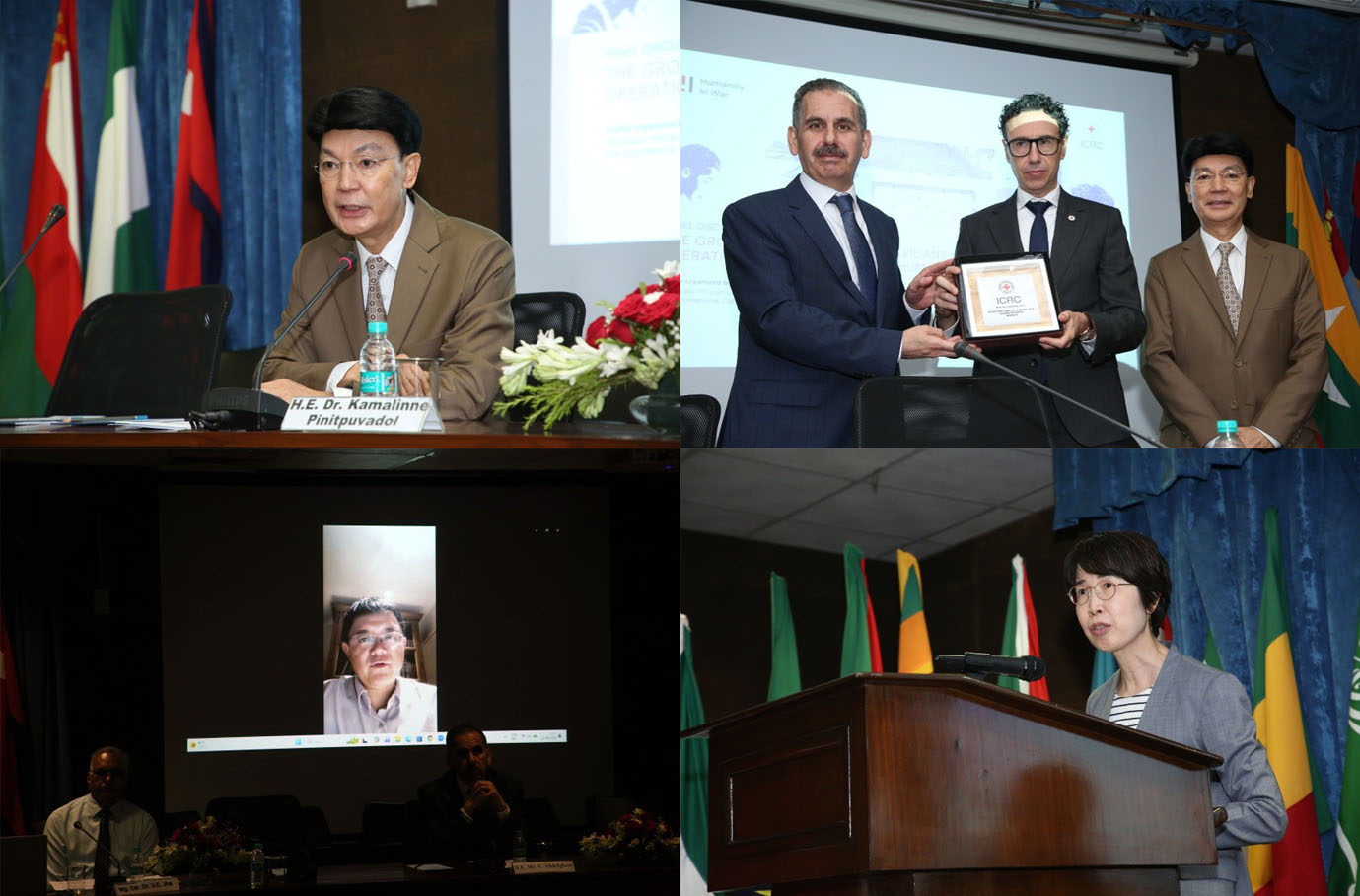
The Panel Discussion commenced with Opening Remarks by H.E. Dr. Kamalinne Pinitpuvadol, Secretary-General of AALCO, who highlighted the growing challenges posed by cyber operations in contemporary armed conflicts and emphasised the importance of continued Asian and African engagement in global discussions on the application of IHL in cyberspace.
Welcome Remarks were delivered by Mr. Alfonso Verdu Perez, Head of Regional Delegation of the ICRC in New Delhi, who highlighted the humanitarian challenges arising from the growing involvement of civilians in cyber operations and emphasised the need to strengthen political commitment towards respect for IHL. He also reaffirmed the longstanding cooperation between AALCO and the ICRC in promoting dialogue on contemporary humanitarian challenges.
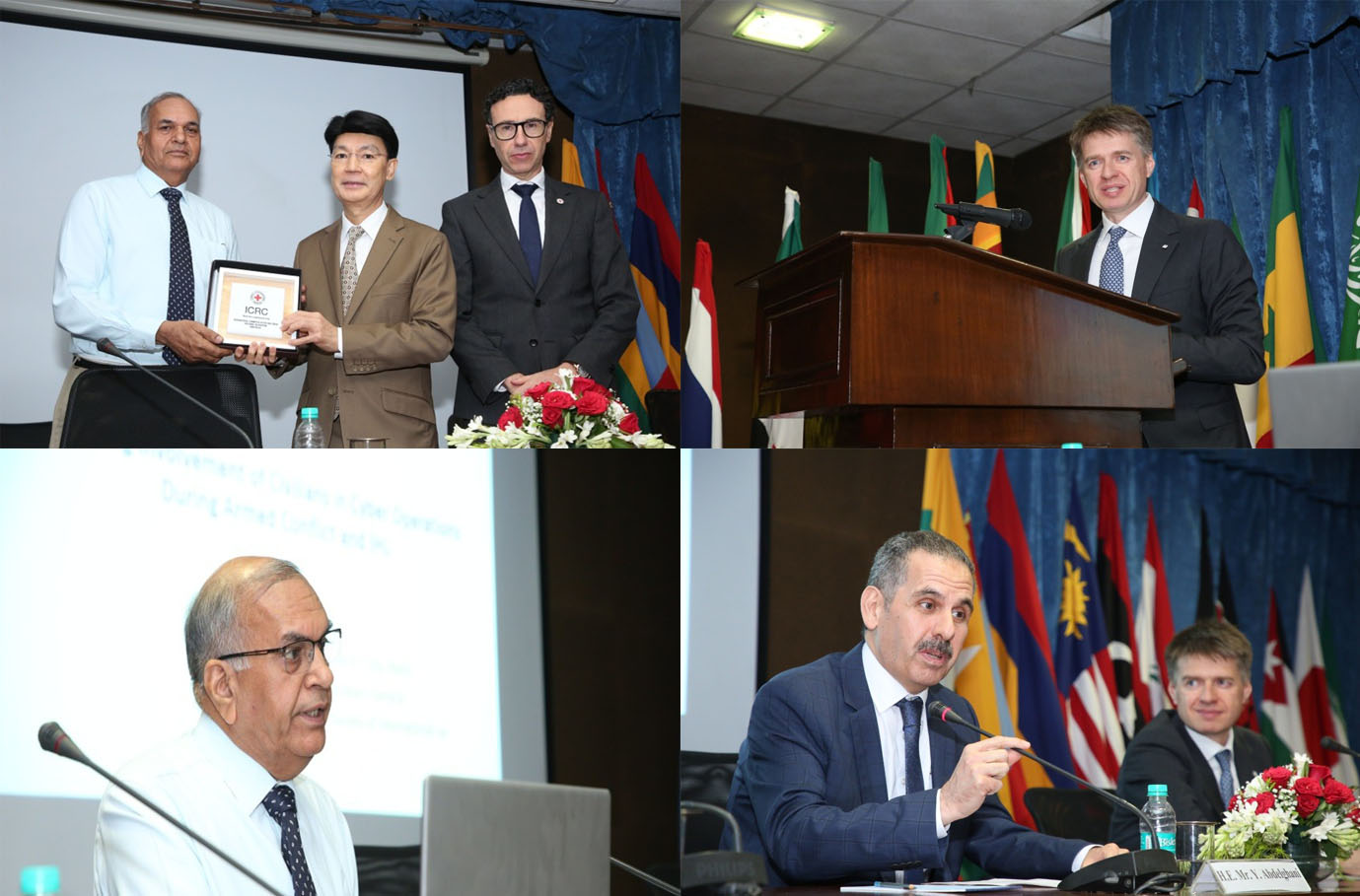
The event featured a presentation by Dr. Andrey Kozik, Regional Legal Advisor for South Asia at the ICRC, on the ICRC report titled International Humanitarian Law and the Growing Involvement of Civilians in Cyber Operations and Other Digital Activities During Armed Conflict, examining the legal and humanitarian implications of civilian involvement in cyber operations during armed conflict. He highlighted the challenges such developments pose to civilian protection, direct participation in hostilities, and the application of IHL in cyberspace.
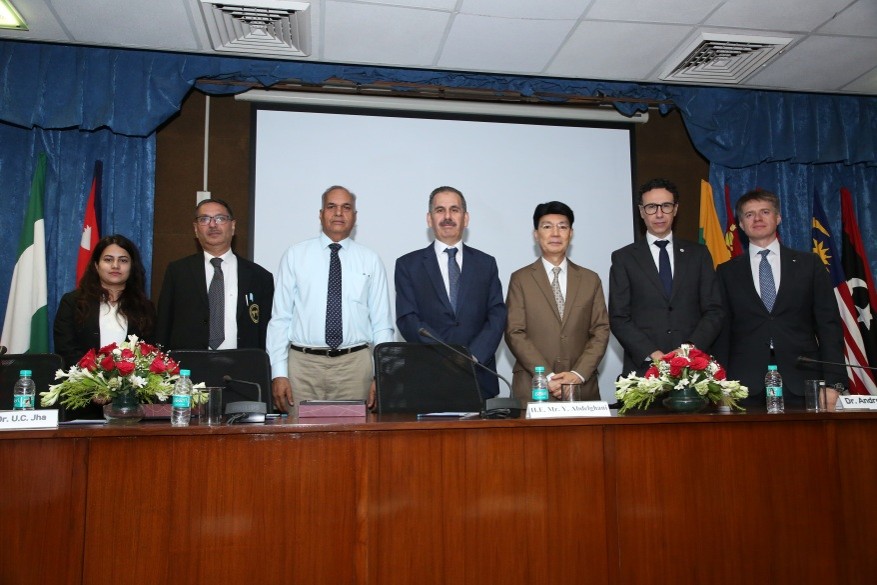
The Panel Discussion featured interventions from H.E. Mr. Yousef Abdelghani, Ambassador of the Hashemite Kingdom of Jordan to India; Dr. Andrey Kozik; Wg. Cdr. Dr. U.C. Jha, Secretary-General of the Indian Society of International Law; and Prof. Zhixiong Huang of Wuhan University Institute of International Law and Institute of Cyber Governance, China, through a recorded video message. The Panel Discussion was moderated by Dr. Shikhar Ranjan Director of Legal Affairs, AALCO.
H.E. Mr. Yousef Abdelghani reflected on the broader challenges confronting international law and emphasised the importance of international cooperation and political commitment in strengthening compliance with IHL. He highlighted the significance of the forthcoming High-Level Conference on Humanity in War in Jordan under the GIIHL framework and called upon States to work collectively towards safeguarding humanity during armed conflict.
Wg. Cdr. Dr. U.C. Jha analysed the legal and operational challenges arising from civilian involvement in cyber warfare, particularly the difficulties in distinguishing civilians from combatants in cyberspace, and highlighted the importance of developing cyber doctrines consistent with IHL. He further discussed the application of core IHL principles such as distinction and proportionality to cyber operations and stressed the importance of States developing clear cyber doctrines and operational manuals consistent with international humanitarian law.
In his recorded intervention, Prof. Zhixiong Huang highlighted the growing role of private technology companies and AI-enabled cyber operations in armed conflicts, and noted the emerging legal challenges these developments pose for civilian protection and the future development of IHL in cyberspace. Prof. Huang also noted that the possibility of developing new legal instruments or protocols addressing cyber operations under IHL may require further international consideration.
The presentations were followed by an engaging Question and Answer Session involving diplomats, legal scholars and participants from diverse professional backgrounds. Discussions focused on the applicability of IHL to cyber operations, accountability and compliance challenges, the risks posed to civilians, and the need for enhanced international cooperation and dialogue in addressing emerging humanitarian concerns in the digital domain.
A felicitation ceremony for the distinguished panellists was held by H.E. Dr. Kamalinne Pinitpuvadol, Secretary-General of AALCO, and Mr. Alfonso Verdu Perez, Head of Regional Delegation of the ICRC in New Delhi.
The programme was moderated by Dr. Sumi Pant, Legal Officer at AALCO. It concluded with a Vote of Thanks delivered by Ms. Sakura Ozaki, Deputy Secretary-General of AALCO.
The Panel Discussion concluded with renewed recognition of the importance of preserving the humanitarian principles underpinning international humanitarian law amidst rapidly evolving technological realities. The event also reaffirmed AALCO’s continued commitment to providing a meaningful platform for Asian and African States to engage with contemporary developments in international law and contribute constructively to ongoing global legal discourse.